Extra! Extra! Fold All About It: Decoding Letterlocking
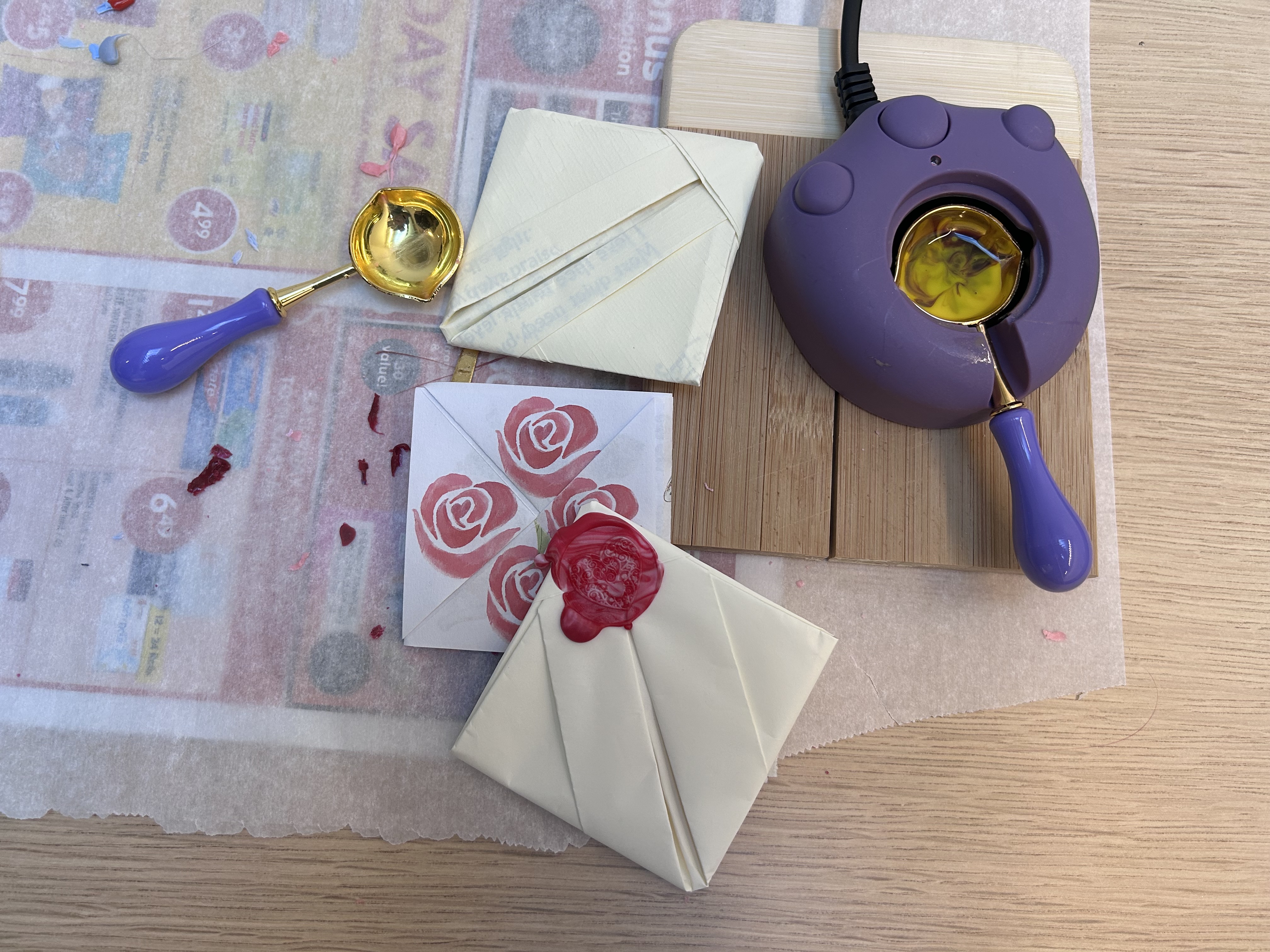
Last Friday, just ahead of Valentine’s Day, we gathered at Western Libraries with pals from Huron Library for a hands-on workshop called Decoding Letterlocking — and it was a delight. There is something deeply satisfying about folding paper. But letterlocking is more than decorative craft. It is, quite literally, an early modern security system. Before the investions of envelopes and adhesive strips there was the folding, tucking, and wax seals. Letterlocking is the practice of folding and securing a letter so that it becomes its own envelope. People used ingenious folding techniques to protect privacy and signal trust, hierarchy, and intimacy. The structure of a letter could communicate meaning before a single word was read. .
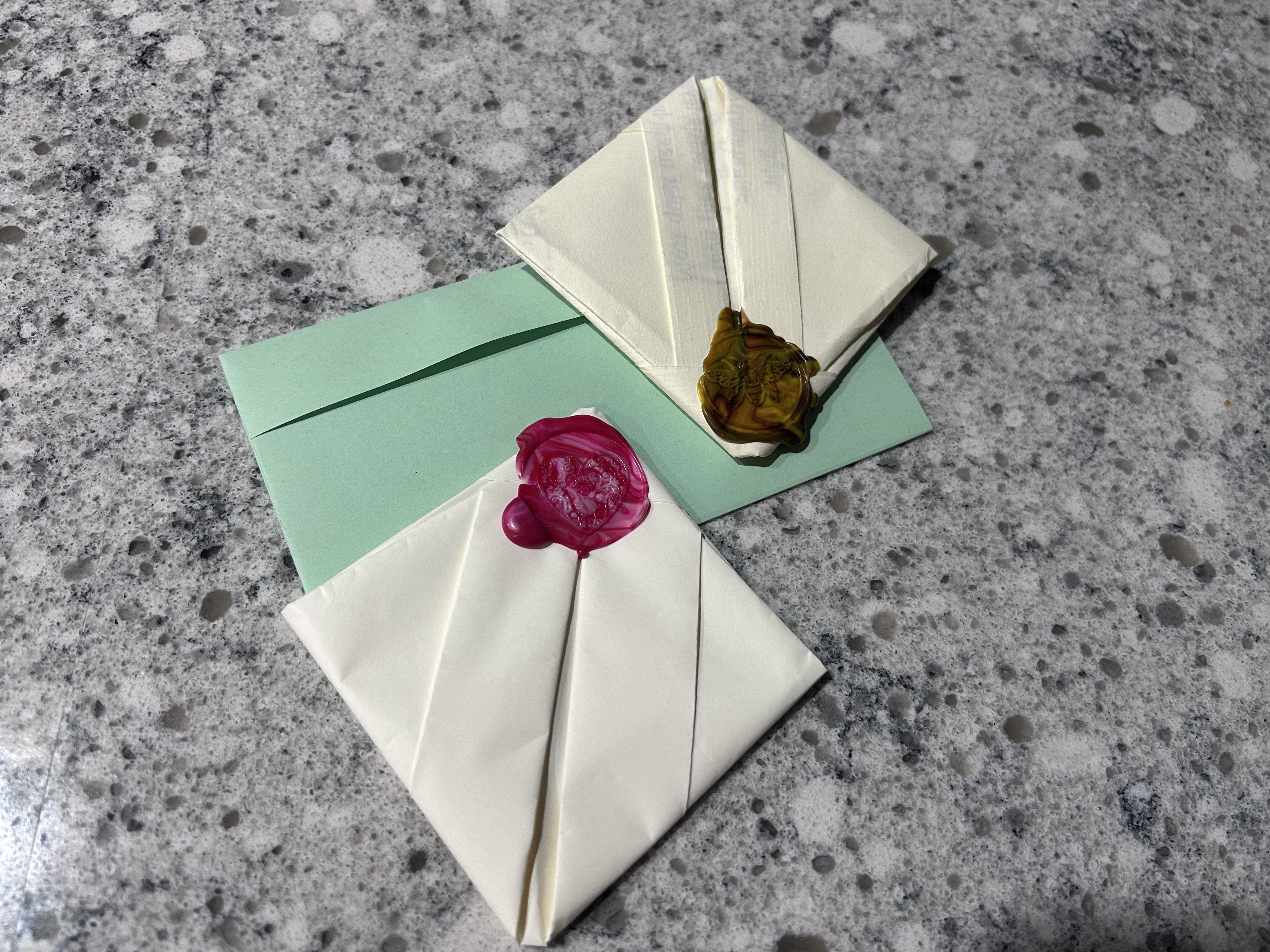
For librarians, archivists, and digital humanists, letterlocking is a powerful reminder that form carries information. We are trained to pay attention to provenance, metadata, and physical structure. Letterlocking shows us that the fold itself is part of the record. It is a privacy technology. A communication strategy. A preserved trace of social relationships. Today, researchers are using non-invasive imaging and digital modelling to virtually unfold sealed historical letters. But before we get to 3D modelling and virtual reconstruction, we begin with paper in our hands.
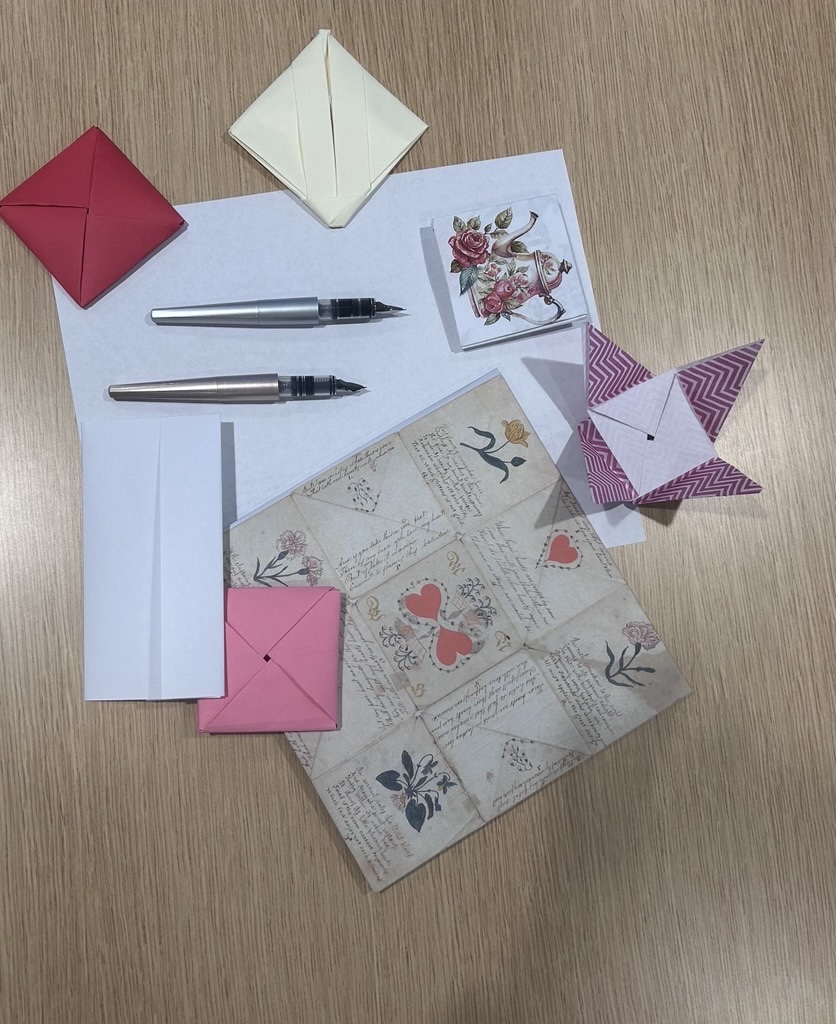
One of the most meaningful moments of the workshop was the quiet concentration once everyone began folding. There were small adjustments. A few puzzled looks. And then the inevitable, triumphant “ohhh!” Reconstructing historical locking formats, including the charming puzzle purse, perfect for a Valentine, invites slow, attentive scholarship. When you physically map the opening sequence of a letter, you begin to understand why archivists hesitate to flatten them. You see folds not as damage, but as design. Hands-on work bridges book history and digital humanities. It reminds us that material practice and digital analysis are not opposites — they are partners. And sometimes, the simplest act — folding a sheet of paper — can open entirely new ways of reading the past.💌✨